JournalOperations
Creative agency project management software: why tools alone won’t help you scale
Why the right project management tool still leaves small agencies missing deadlines, and the operational oversight layer that actually fixes it.
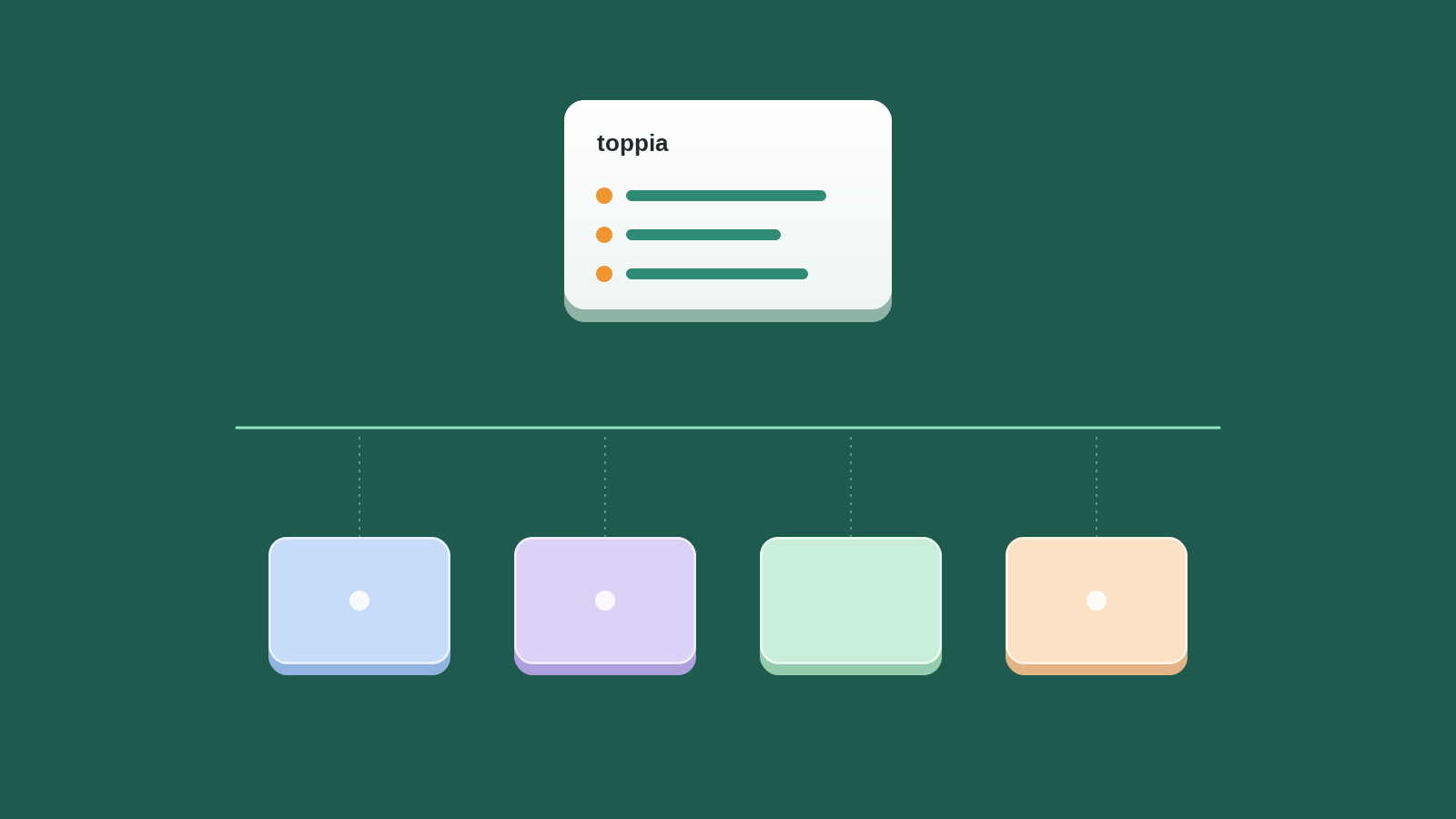
You chose a project management tool, set it up, and your team still misses deadlines. Scope creeps. Clients email asking for updates you don’t have. If you’re running a small marketing agency, you already know the frustrating truth: the software isn’t the bottleneck. The operational layer sitting above it is. Most agency owners spend more time managing the system than doing the work the system was supposed to protect. The right software categories matter, but without strategic oversight connecting them, even the best stack leaves you trapped in reactive mode.
What small marketing agencies actually need from project management software
Picture this: a founder spends a Saturday afternoon researching PM tools, signs up for a trial, migrates everything over, runs a team training session on Monday. By Friday, half the team is back in Slack threads and email chains. Sound familiar?
The problem usually starts before the first login. Generic project management tools are built for generic teams. A marketing agency has specific operational DNA: visual asset review cycles, client approval workflows, creative brief handoffs, and resource utilization that fluctuates wildly between pitches and production sprints. A tool built for a software development team or a construction firm will never quite fit, no matter how many custom fields you add.
For agencies in the 3–15 person range, the tools that consistently surface as strong fits include Toppia, Monday.com, ClickUp, Asana, Teamwork, Wrike, Productive.io, ActiveCollab, and Filestage for proofing and review workflows. Each has a different center of gravity. Teamwork and Productive.io lean into agency-specific features like time tracking tied to billing and client-facing portals. ClickUp and Monday.com offer enormous flexibility, but that flexibility comes at a cost: steep learning curves and a configuration burden that usually requires a dedicated ops person to maintain. For a team of eight, that’s a luxury you probably don’t have.
The selection criteria that actually matter for small agencies are deceptively simple:
- Ease of onboarding.Because no one has two weeks for a rollout.
- Client-facing portals.Because clients will always want visibility.
- Time tracking connected to billing.Because profitability depends on it.
- Integrated resource planning.Because over-promising is the silent killer of agency margins.
“We chose our first tool for its Gantt chart. We chose our second for its integrations. By our third tool, we finally asked ourselves what process we were actually trying to support.”
That sequence, features first and workflow second, is the most common selection mistake in the industry. Knowing which tool fits is step one. But even the right tool fails if the operational habits around it are broken, and that leads to the real crisis most small agencies face.
The real operational crisis behind missed deadlines and scope creep
Here’s a scenario that plays out constantly. A seven-person agency is running three concurrent client campaigns. The founder is the de facto project manager, account lead, and new business closer. Nobody has a real-time view of who is working on what. A junior designer gets pulled onto a rush project. The original deliverable slips. The client notices before anyone internally does. The retainer is at risk.
The tool didn’t cause this. The absence of an operations function did.
Agency benchmarking surveys consistently show that owners spend 30–50% of their week on admin, coordination, and operational tasks rather than billable or strategic work. That’s not a productivity problem. It’s a structural one. When there’s no dedicated person tracking utilization, flagging at-risk projects, or enforcing process between client work, the founder absorbs all of it by default.
Scope creep and missed deadlines correlate directly with agencies that lack a formal project intake and change-order process, not with which PM software they’re using. The tool is downstream of the problem. You can have the most sophisticated task management setup in the world, but if a client calls and asks for “one small change” and your team says yes without a documented process, you’ve already lost margin you’ll never recover.
Resource allocation is the number one reported pain point for small agencies, and it makes sense. When no one has a real-time capacity view, over-promising is almost inevitable. You win the pitch on a Tuesday without knowing that your best writer is already at 110% for the next three weeks.
The “tool-hopping” trap compounds all of this. Agencies average two to three PM tool switches in their first five years. Each switch costs weeks of migration, re-onboarding, and lost institutional knowledge baked into the old system. The team that was already skeptical of the last tool becomes even more resistant to the next one. The irony is that the switch rarely solves the underlying problem, because the problem was never the tool.
Hiring a full-time operations manager to fix this runs $80,000 to $120,000 or more annually. For a sub-15-person agency, that hire often isn’t financially viable until the chaos has already done serious damage.
The solution isn’t a better tool. It’s the operational intelligence layer that sits above the tools.
A growing number of agency owners are finding that layer in AI-powered systems rather than new hires.
How marketing agencies are scaling operations without adding headcount
The agencies that figure this out early share one trait: they stop trying to solve an operations problem with a software purchase and start building the oversight function itself.
Think about what an operations manager actually does. They check in on project health without being asked. They notice when a team member is overloaded before a deadline slips. They enforce the intake process when a client tries to add scope. They give the principal a weekly picture of where the business stands. That function, not the task management software underneath it, is what keeps a small agency from running on chaos.
The emerging model in 2025 is using AI to perform exactly these functions. Key operational tasks that agencies are now automating or AI-augmenting include:
- Project status updates.
- Resource utilization monitoring.
- Client reporting.
- SOW and scope tracking.
- Weekly team check-ins.
These aren’t glamorous capabilities. But they’re the ones that, when missing, cost agencies retainers and margins.
The data on this is compelling. Agency owners who add a genuine ops layer, whether human or AI-assisted, report reclaiming 8–12 hours per week. That’s time that goes back into client strategy, business development, or simply thinking clearly about where the business is headed. Agencies that systematize operations early consistently grow revenue per employee faster than those that hire reactively to manage chaos.
This is exactly the gap Toppia was built to fill. Toppia functions as an AI chief of staff for small studios, agencies, and consultancies: the operational oversight layer that most sub-15-person teams desperately need but can’t justify as a full-time hire. It sits above your existing PM tools, tracks what’s slipping, surfaces what needs your attention, and keeps you focused on growth work rather than coordination overhead. It augments the infrastructure you already have rather than replacing it. If you don’t yet have a PM tool in place, that’s the first step. Toppia works best when there’s project infrastructure underneath it to monitor.
The “chief of staff” function, someone who sees across all projects, holds the team accountable, and keeps the principal focused on growth, is the missing layer for most small agencies. Before choosing any tool or operational system, though, it helps to answer the questions that come up most often when agency owners realize their current setup isn’t working.
Stop managing your stack and start running your agency
The agencies that grow aren’t the ones with the best software. They’re the ones with the clearest operational picture at any given moment. They know which projects are at risk before the client calls. They know who has capacity before they take on new work. They know their utilization rate without pulling a report manually every Friday afternoon.
That clarity doesn’t come from a better tool. It comes from having someone, or something, whose job is to hold the whole picture.
Toppia was built specifically for this gap. Not as an enterprise platform retrofitted for small teams, but as an AI chief of staff purpose-built for studios, agencies, and consultancies in the 3–15 person range. It provides cross-project visibility, proactive bottleneck alerts, capacity and workload monitoring, and strategic check-ins without the overhead of a full-time ops hire. It sits above the PM tools you already use and does the work that currently falls through the cracks between your software and your bandwidth.
The problem you’ve been trying to solve with another software trial isn’t a software problem. It’s an oversight problem. You don’t need to hire. You need oversight. That’s what Toppia provides.
In brief
Common questions
What is the best project management software for a small marketing agency?
There’s no universal answer, and anyone who tells you otherwise is selling something. The right tool depends on your team size, client volume, and whether you need built-in time tracking, client portals, or deep resource planning. For agencies under 15 people, Teamwork, Productive.io, and ActiveCollab are frequently cited for agency-specific features. Monday.com and ClickUp offer more flexibility but demand more configuration investment. The more important question is whether you have the operational discipline to run whichever tool you choose consistently, because an underused sophisticated tool is worse than a simple one your team actually adopts.
Why do agencies keep switching project management tools?
Tool-switching almost always signals an operations problem, not a software problem. Agencies switch when adoption breaks down, when no one owns the system after setup, or when the tool was chosen for features rather than actual workflow fit. The switching costs are high: migration time, retraining, lost historical data, and a team that becomes increasingly cynical about the next rollout. The fix is usually process and ownership, not a new platform. Before switching, ask honestly whether a new tool would change anything, or whether the same habits would follow you to the next one.
How can a small agency scale without hiring a full-time operations manager?
The practical answer in 2025 is AI-assisted operations. Tools like Toppia act as an AI chief of staff, monitoring project health, flagging risks, tracking capacity, and keeping the principal focused on growth work rather than daily coordination. This gives small agencies the oversight function of a COO without the $80,000-plus annual salary. The key is treating it as a genuine operations layer, not just another app in the stack. The goal is to get the function, not just the software.
What’s the difference between project management software and operations management for agencies?
PM software tracks tasks, timelines, and deliverables. Operations management is the strategic layer above it: capacity planning, profitability tracking, process enforcement, and cross-project visibility. Most agencies have the former and are missing the latter, which is why projects still slip even with good tools in place. You can have a perfectly configured ClickUp workspace and still have no idea whether your team is overloaded, whether a project is quietly going over budget, or whether a client is about to churn. That visibility lives in the operations layer, not the task list.